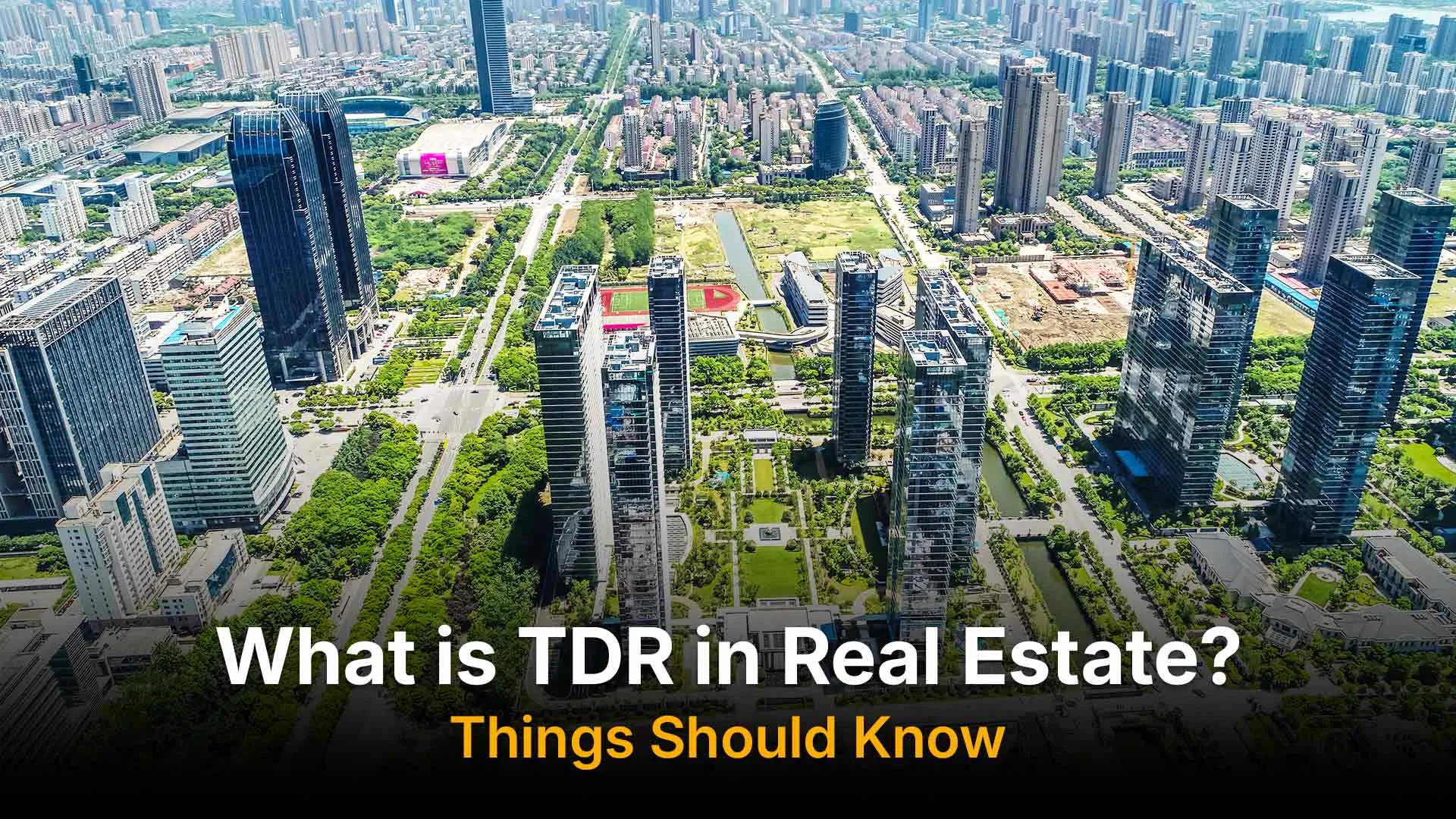
Have you heard real estate developers and experts throw around the term FSI in real estate but felt unsure about what it truly means? Are you wondering how FSI impacts property value, construction costs, and even city skylines? If you’re a real estate developer or investor looking to understand one of the industry’s most critical concepts, you’re in the right place.
This comprehensive guide will not only explain what is FSI in real estate, but it will also uncover the calculations behind it, the factors influencing it, and its importance to builders, buyers, and investors alike.
What Is FSI in Real Estate?
FSI, or Floor Space Index, is a value that determines the total allowable built-up area on a specific plot of land. It is calculated in the form of a built-up ratio meaning the size of the building to the size of the plot.
For instance, if the FSI of a property is 2 then it implies that the developer can construct the space with an area two times the size of the site. That makes FSI an essential aspect of real estate and plays a role in most aspects of the size of the development to the viability of the project.
What is the FSI Formula?
The formula for calculating Floor Space Index (FSI), also known as Floor Area Ratio (FAR) in some regions, is fairly straightforward and an essential concept in real estate development.
FSI = Total Built-Up Area / Plot Area
This ratio determines the maximum permissible built-up area on a specific plot of land, effectively regulating the scale of construction allowed. For instance, on a plot of 1,000 square meters with an FSI of 1.5, the allowable built-up area would be:
1,000 x 1.5 = 1,500 square meters.
This means that developers can build as much as 1500 square meters of built-up space which can be one or several floors depending on the local building regulations. FSI appears to be more imperative to urban design and planning since it determines the allowed height or density. Get in touch with the leading Real Estate Advisory in Bangalore to get started today!
Understanding this formula is crucial for developers, architects, and investors as it governs the scale and scope of any real estate project. It also helps in optimizing land management and development, productivity, and profitability while following the regulations of the government to attain a balanced distribution of urban growth and profitable property development.
What Impacts FSI in Real Estate?
Several factors influence FSI, making it vital to understand how these elements interact to shape real estate projects.
1. Zoning Regulations
Local zoning laws dictate the permissible FSI in different areas. Residential, commercial, and mixed-use zones often have distinct FSI limits, reflecting the intended use and density of that area. Understanding What is FSI in Real Estate is crucial to navigating these zoning regulations effectively.
2. Location
Cities with high population densities usually allow higher FSI values to support taller buildings and urban growth. For example, central business districts often have higher FSIs compared to suburban areas. Knowing What Is FSI in Real Estate helps clarify how location impacts development potential.
3. Infrastructure Capacity
The ability of local infrastructure—such as roads, water supply, and sewage systems—to support higher FSI is a critical consideration. If the infrastructure cannot handle increased density, FSI may be capped. Developers must grasp What Is FSI in Real Estate to evaluate infrastructure feasibility.
See Also: Doddaballapur: The Future Hub of Real Estate in North Bengaluru
4. Plot Size
Smaller plots might face stricter FSI restrictions due to the limited scope for structural development, while larger plots generally allow for higher FSIs. A solid understanding of What is FSI in Real Estate can guide decisions based on plot size constraints.
5. Building Height Restrictions
Even with a high FSI, local height restrictions imposed to preserve city aesthetics or comply with aviation guidelines can limit construction. Knowing What Is FSI in Real Estate ensures compliance with such restrictions.
6. Environmental Considerations
What Is FSI in Real Estate also depends on ecological preservation needs. For instance, areas near forests, rivers, or other sensitive zones often have lower FSI to prevent overdevelopment.
7. Public Amenities
Governments often adjust FSI limits based on the availability of public spaces like parks, schools, and hospitals. These amenities directly impact the livability of high-density areas. Understanding What Is FSI in Real Estate highlights how these factors shape community planning.
8. Government Policies
FSI policies vary significantly based on local governing bodies. Sometimes, higher FSIs are offered as incentives for sustainable building practices or affordable housing developments. Familiarity with What Is FSI in Real Estate helps developers leverage such policy benefits.
Importance of FSI
The importance of FSI in real estate cannot be overstated. Whether you’re a developer designing a commercial complex or a buyer looking for a new home, FSI has far-reaching implications.
Significance of FSI for Homebuyers
- Property Utilization – FSI influences how much livable space you get on a plot of land, impacting the size and comfort of your future home.
- Affects Density – Areas with high FSIs often have higher population density, impacting lifestyle and access to amenities.
- Environmental Impact – Lower FSI areas typically mean fewer high-rises and greener surroundings.
Significance of FSI for Builders
- Project Scale – Higher FSI enables developers to create larger commercial or residential projects, maximizing ROI.
- Market Appeal – The right FSI allows builders to balance unit density and design, increasing market attractiveness.
- Regulatory Compliance – FSI helps ensure projects adhere to legal standards, reducing future liabilities.
What is Premium FSI?
Premium FSI refers to the extra FSI developers can purchase by paying premiums to local authorities. This option is often available for plots adjacent to main roads or premium locations within a city. Premium FSI is a tool builders use to maximize their development potential while adhering to legal frameworks. However, the costs involved can be significant, making it a strategic investment rather than a standard choice.
Partner with Arisunitern for Real Estate Success
Whether you’re a seasoned real estate developer or a first-time investor, understanding what is FSI in real estate means and how it works is crucial for making informed decisions. With FSI being such a pivotal factor in development, it pays to stay updated on local rules and market trends.
When navigating such complex parameters, having expert guidance can make a world of difference.
Arisunitern, a Real Estate Development Management Company in Bangalore is a powerhouse of seasoned professionals with over 250+ years of deep industry experience. Our team specializes in providing end-to-end solutions for real estate projects across the 3M’s of real estate—Money, Material, and Management.
We partner with clients to craft innovative, simple, and responsible strategies that deliver the best outcomes. By operating in alignment with your brand identity, we ensure your vision stays intact while magnifying its value.
If you’re looking to enhance your project strategy, Arisunitern is here to help. Together, we’ll create a win-win approach to real estate development.
FAQs
How do you calculate FSI?
FSI (Floor Space Index) is calculated using the formula:
FSI = Total
Built-Up Area / Total Plot Area.
It determines how much construction is allowed on a given plot. For
example, if a plot is 1,000 sq. ft. with an FSI of 2, you can construct up to 2,000 sq. ft.
What does 2 FSI mean?
A 2 FSI indicates that the total built-up area of a building can be double the plot size. For instance, on a 1,000 sq. ft. plot, you can construct a total of 2,000 sq. ft. across multiple floors, ensuring compliance with local regulations.
What is 1.5 FSI?
An FSI of 1.5 allows construction of 1.5 times the area of the plot. For example, on a 1,000 sq. ft. plot, the permissible built-up area is 1,500 sq. ft., which could be divided across floors. It offers moderate density construction.
Is higher FSI better?
A higher FSI allows more construction on a given plot, which can maximize utility and profitability, especially in urban areas. However, it also means higher population density, increased infrastructure demands, and stricter compliance requirements, so its suitability depends on the project’s goals.