
Powerful procurement in construction projects boosts success
Have you ever faced delays because of late material deliveries or gone over budget due to last-minute procurement decisions? What if the key to avoiding these issues was a well-planned procurement in construction projects strategy? It’s true! Procurement in construction projects impacts everything, from timelines to budgets.
A smooth and efficient procurement process ensures that your materials are available on time, reducing downtime and avoiding unnecessary cost escalations. In this blog, we will explore how effective procurement in construction projects can be a game-changer for your project success, helping you stay on track with timelines and within budget.
Understanding Material Procurement
Material procurement in construction projects refers to sourcing and acquiring the necessary materials for the successful execution of a construction project. It goes beyond just placing an order for materials; it involves understanding the construction procurement process, managing suppliers, ensuring quality standards, and handling logistics.
Proper construction material procurement means that the right materials are delivered in the right quantities, at the right time, and at the right cost. When managed efficiently, procurement becomes a value lever — one that directly determines how seamlessly a project progresses and how effectively costs are controlled, especially when aligned with Business Verticals that include development management, investment banking, and strategy consulting.
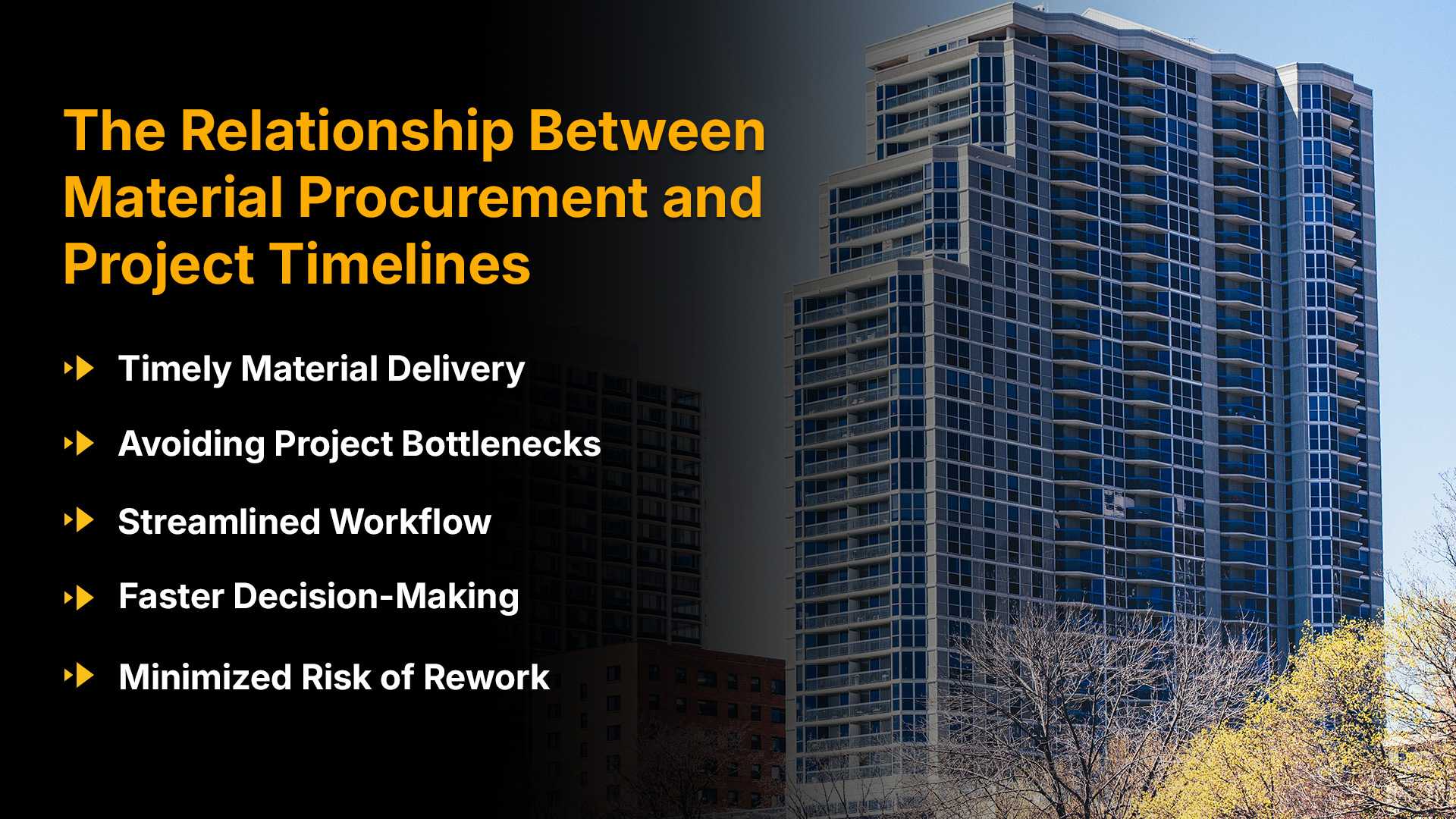
The Relationship Between Material Procurement and Project Timelines
Timely Material Delivery
On-schedule deliveries enable work to continue without disruption. When procurement delays occur, site productivity suffers — leading to cascading timeline shifts. An efficient procurement framework ensures seamless coordination between suppliers, contractors, and project managers.
Avoiding Project Bottlenecks
A well-structured construction procurement process reduces the risk of bottlenecks that can halt progress. For instance, if essential materials like cement or steel are delayed, it could hold up significant construction phases, pushing the project timeline.
Streamlined Workflow
Efficient procurement management in construction ensures that materials needed at every stage of construction are available when required, ensuring smooth workflow across different teams. Coordination between procurement and construction teams is vital for this to happen.
Faster Decision-Making
When the procurement process is organized and transparent, it becomes easier to make quick decisions regarding material orders, avoiding unnecessary delays.
Minimized Risk of Rework
If incorrect or subpar materials are delivered due to poor procurement, it may result in rework, adding extra time to the project. Proper procurement ensures that quality materials are ordered, reducing the need for rework.

The Link Between Material Procurement and Budget Management
Cost Control
Strategic procurement allows developers to leverage economies of scale, negotiate better supplier terms, and lock in prices early — shielding projects from market volatility.
Avoiding Costly Mistakes
Improper material procurement can lead to mistakes like ordering the wrong quantities or substandard materials. This not only wastes money but also adds costs for reordering or replacing materials. Efficient procurement ensures the right materials are ordered in the correct quantities, keeping costs in check.
Reduced Wastage
Excess inventory ties up capital and space; understocking delays progress. A balanced approach through data-driven forecasting helps minimize waste while ensuring uninterrupted supply.
Benefits of Effective Material Procurement in Construction Projects
Project Efficiency
When materials are procured correctly and delivered on time, the entire project runs more efficiently. This results in faster completion, improved productivity, and better use of resources.
Cost Savings
Proper construction procurement process allows you to take advantage of bulk discounts, avoid rush orders, and minimize wastage. These cost-saving measures directly benefit your project’s bottom line.
Quality Assurance
Effective procurement ensures that materials meet the required quality standards. This minimizes defects, improves the final product, and reduces the risk of rework or replacements.
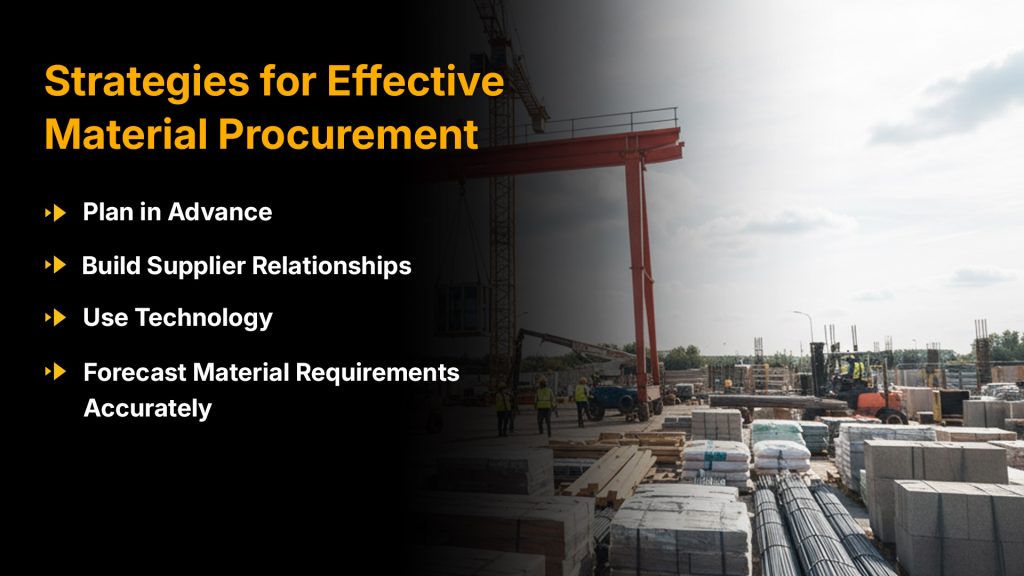
Strategies for Effective Material Procurement
Plan in Advance
Effective construction project procurement starts with proper planning. Knowing the materials you need, when you need them, and how much you need allows for timely orders and avoids last-minute procurement.
Build Supplier Relationships
Developing long-term relationships with reliable suppliers is crucial. By having a trusted supplier network, you can ensure timely deliveries and often negotiate better prices, helping you stay within budget.
Use Technology
Adopting procurement software tools can help streamline the procurement management in the construction process. These tools allow for better tracking, forecasting, and inventory management, reducing human errors and delays.
Forecast Material Requirements Accurately
Accurate forecasting can prevent over-ordering or under-ordering of materials. Understanding the scope and stages of the project is key to predicting material needs, ensuring optimal procurement and cost control.

Conclusion
Effective procurement in construction projects is not just a back-end function — it’s a strategic enabler that drives time, cost, and quality performance. At Unitern, we understand the complexities of construction procurement. Through our parent company Arisinfra, our procurement systems are built on discipline, technology, and foresight, ensuring every project we manage benefits from consistency and control.
By partnering with us, you gain a trusted ally who ensures your project is delivered on time, within budget, and with the highest standards of quality. Together, we create innovative and responsible solutions that deliver the best outcomes for your business.
FAQs
What is procurement in construction projects?
Procurement in construction projects refers to the process of sourcing, purchasing, and managing materials, services, and resources required for a construction project. It involves selecting suppliers, negotiating contracts, and ensuring timely delivery of goods to keep the project on schedule and within budget.
How does procurement work in construction projects?
Procurement in construction projects involves identifying material needs, selecting suppliers, obtaining quotes, negotiating contracts, and ensuring the timely delivery of materials. The process also includes managing inventory, tracking orders, and maintaining quality standards, with a focus on staying within the project’s budget and timeline.
Why is procurement important in construction projects?
Procurement is crucial because it directly impacts the timely completion and budget control of construction projects. Proper procurement ensures that materials are available when needed, prevents delays, and minimizes cost overruns, thereby contributing to the overall success and efficiency of the construction project.
How to optimize procurement in construction projects?
To optimize procurement in construction projects, focus on planning and accurate forecasting, build strong supplier relationships, use technology for tracking and inventory management, negotiate favorable terms, and streamline the purchasing process. These strategies help reduce costs, improve timelines, and ensure materials meet quality standards.