Real Estate Development Management is transforming how Indian cities grow — have you noticed how rapidly our urban spaces are evolving? What will your city look like five years from now? And most importantly are you ready to build the future?
In 2025, real estate is no longer just about land and construction—it’s about smart execution. Development Management is reshaping how projects are delivered in India, offering a streamlined, collaborative approach from vision to reality. This model empowers developers and landowners with expert-driven solutions, ensuring timely delivery, reduced risks, and better profitability. Here’s why it matters more than ever.
See Also: What Is FSI in Real Estate? All You Need to Know
Real Estate Development Management
Development Management is becoming a game-changing model for real estate growth in India. It brings together developers, landowners, and expert consultants to manage projects end-to-end, ensuring higher efficiency, better cost control, and reduced risks. Inspired by successful adoption in countries like Australia and the UK, this approach is now gaining strong momentum in Indian markets.
It covers a wide range of functions — from funding, procurement, and project execution to sales, marketing, and CRM. Small developers gain access to expert resources they typically lack, while larger players benefit from partnering with regional specialists who understand local markets. This collaboration improves market reach, ensures timely delivery, and brings greater financial transparency and operational clarity.
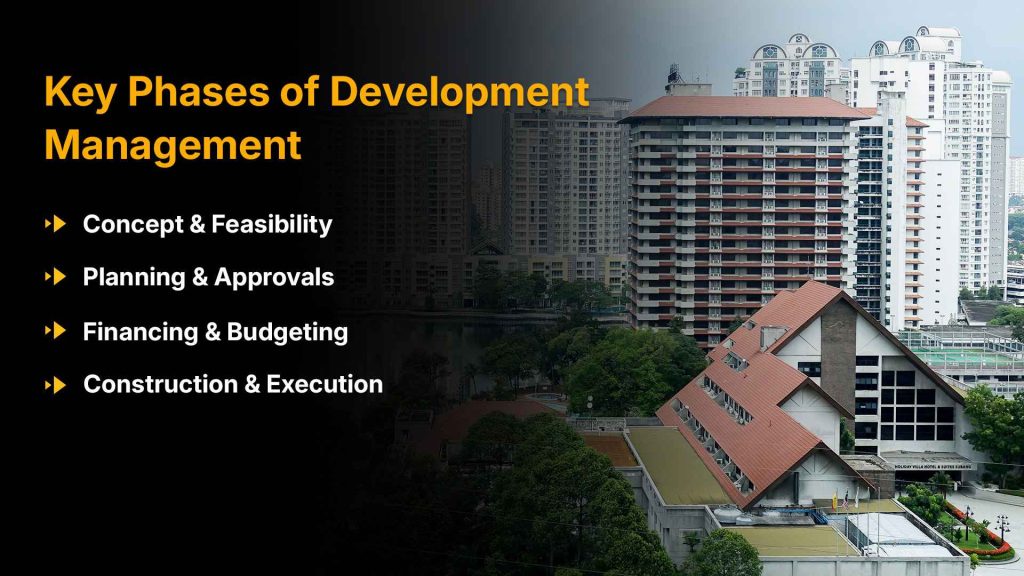
Key Phases of Real Estate Development Management
1. Concept & Feasibility
Every successful real estate project begins with a clear vision. In this phase, you define the project’s scope and evaluate its viability. You assess the location, market demand, environmental factors, and financial potential through a detailed feasibility study. This includes risk analysis, legal checks, and initial cost estimates.
2. Planning & Approvals
Once your concept is viable, you move to detailed planning. Here, you work with architects and consultants to prepare design layouts, floor plans, and master plans. You initiate the permit and approval process with local authorities, zoning boards, and utility companies. Simultaneously, you start securing funding and formalize project timelines. Get
3. Financing & Budgeting
Strong financial planning is the backbone of effective real estate project management. You identify and finalize funding sources, which could include equity investors, banks, or internal capital. You then build a comprehensive budget, considering construction, legal, marketing, and operational costs. in touch with the best Real Estate Advisory in Bangalore today!
4. Construction & Execution
This is where your plans become a physical reality. Your role is to manage contractors, suppliers, and on-site operations. You ensure timelines are followed, materials meet specifications, and safety standards are upheld. Daily progress reports, inspections, and collaboration tools help you track performance.

Why Strategic Management Matters in Real Estate
1. Reduces Financial Risk – You protect your investment by ensuring budgets, timelines, and cash flow align precisely with project goals. Strategic real estate project management keeps you aware of financial changes, preventing cost overruns.
2. Ensures Legal & Regulatory Compliance – You navigate zoning, permitting, and building codes confidently. Strategic management anticipates legal challenges and resolves them before they stall progress—keeping your project compliant and on schedule.
3. Delivers Timely Completion – On-time delivery is one of the most critical factors for developers. Strategic management ensures clear coordination, proactive problem-solving, and disciplined execution so projects are completed as promised—strengthening credibility with buyers, investors, and partners.
4. Improves Quality & Brand Reputation – You deliver on design, craftsmanship, and safety by enforcing standards throughout. Your control over execution reflects well on you and builds your reputation in real estate development management.
5. Enhances Asset Value & ROI – Through thoughtful planning and execution, you maximize return on investment. You deliver properties that meet market demands, ensuring sustained value and financial success.
6. Drives Optimal Success – When financial discipline, compliance, timely delivery, and quality execution come together, developers achieve holistic success—projects that are profitable, reputable, and future-ready.
See Also: Top 5 Real Estate Market Trends in India to Watch Out For
Common Challenges and How to Overcome Them
1. Permit Delays & Bureaucracy – These often slow startups. You overcome them by starting early, maintaining open communication with authorities, and employing agile planning—keeping momentum steady.
2. Budget Overruns – Weather, material price spikes, or design changes can derail costs. Mitigate risks by including contingencies, tracking expenses closely, and reviewing budgets frequently.
3. Contractor Performance Issues – Subcontractors can underperform. You combat this by selecting partners carefully, setting clear expectations, and holding regular progress and quality reviews.
4. Market Volatility – Demand shifts or economic shocks can shift your strategy. You stay resilient by monitoring trends, scheduling flexible milestones, and building adaptable marketing and leasing plans.

Conclusion
You’ve seen how real estate development management transforms ideas into thriving, built environments. With clear phases—from feasibility through construction—you manage risks, optimize value, and maintain project integrity. Strong real estate project management ensures your vision anchors every decision.
At Arisunitern, the best Real Estate Development Management Company in Bangalore, you gain access to a talent powerhouse of seasoned professionals, combining over 250 years of collective industry experience.
We offer end-to-end solutions across the 3M’s of real estate—Money, Material & Management—ensuring successful development project execution. Choose Arisunitern for strategic real estate development management that turns vision into reality—efficiently, ethically, and excellently.
FAQs
1. What is real estate development management and why is it important?
Real estate development management is the end-to-end process of taking a project from idea to reality—covering planning, design, approvals, construction, and final delivery. It’s not just about managing tasks; it’s about aligning budgets, timelines, quality standards, and compliance to ensure smooth execution.
Its importance lies in minimizing risks, avoiding delays, and ensuring legal and financial discipline, while also delivering projects that meet market demand. Effective development management ultimately drives timely delivery, enhances asset value, and strengthens the developer’s reputation.
2. What are the key phases of real estate development execution?
The key phases include concept planning, feasibility studies, design, approvals, financing, construction, and final handover. Each stage must be carefully managed to ensure smooth development. Proper real estate development management aligns timelines, budgets, and stakeholder expectations for successful project delivery.
3. How long does a typical real estate development project take from start to finish?
Most real estate development projects take 18 to 36 months, depending on size, location, and approvals. Unexpected delays in permits or construction can extend timelines. Strong real estate project management helps streamline the process and ensures timely execution from start to finish.
4. What are the biggest challenges in real estate development management?
Major challenges include regulatory delays, cost overruns, miscommunication, and market shifts. Coordinating different teams and adapting to unexpected changes can be tough. A skilled development manager anticipates these issues and applies proactive strategies to keep projects on track and within scope.
5. How do you choose the right development management company for your project?
Choose a company with experience, transparency, and strong industry knowledge. The right team will guide you through every stage while protecting your interests. A partner like Arisunitern adds value through end-to-end services, deep expertise, and a commitment to your long-term success.