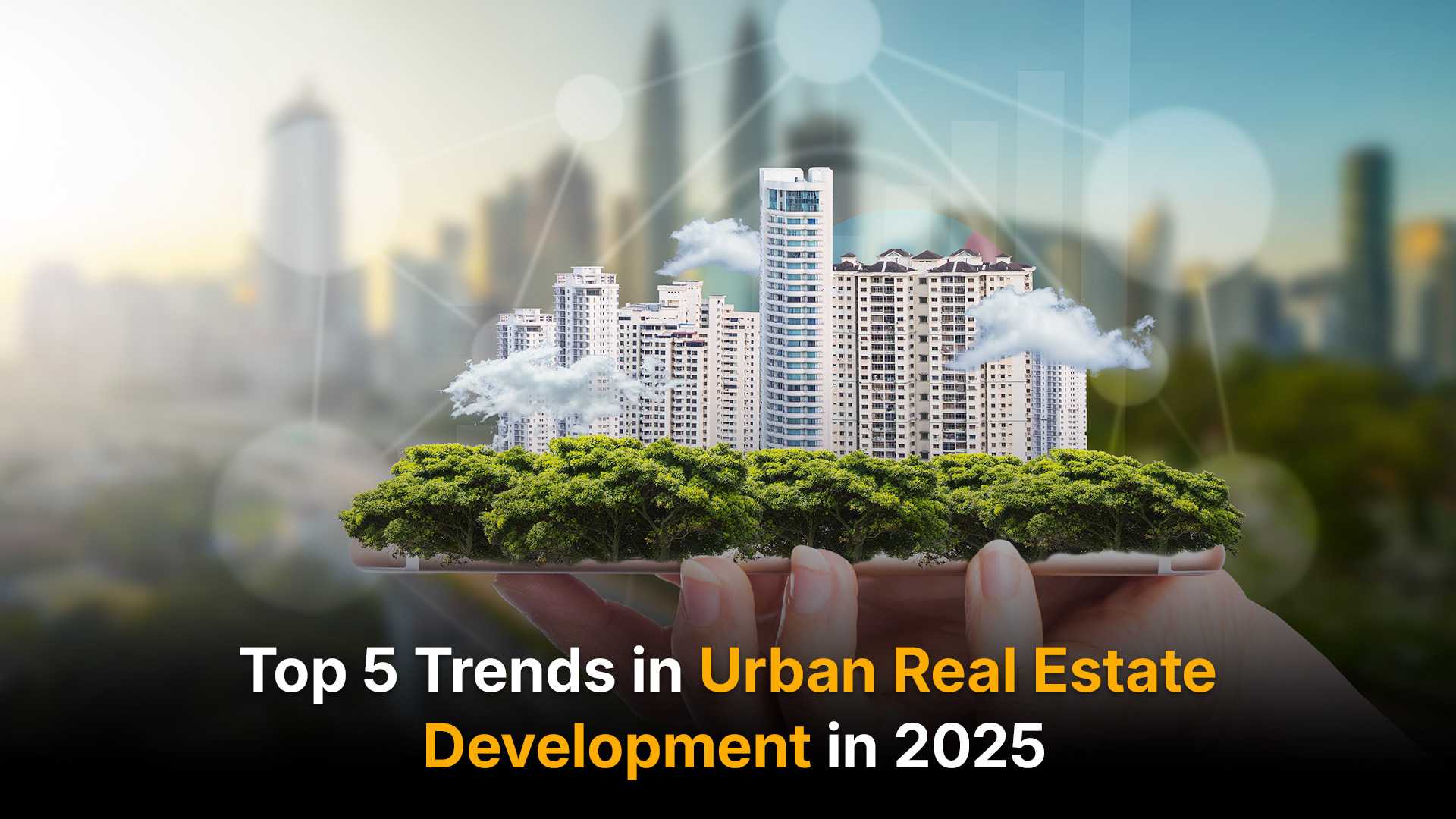
Top 5 Exciting Real Estate Development Trends Shaping Cities 2026
Have you noticed how rapidly Indian cities are evolving? What will your city look like five years from now? And most importantly — are you ready to build the future of real estate development in India?
In 2026, real estate development in India isn’t just about concrete and land — it’s about smart tech, green living, and building communities that last. Whether you’re a developer, investor, or stakeholder, understanding real estate market trends 2026 is crucial. Let’s explore the top 5 trends in real estate development that are shaping the future of Indian cities.
Smart City Integration in Real Estate Development
- Key feature: Smart city infrastructure is now embedded in real estate development across India. Integrated systems for lighting, utilities, traffic, and security provide seamless control, improve safety, and enhance urban living through smart data and real-time analytics.
- 2025 example: In cities like Pune and Bhopal, smart city initiatives have led to fully integrated residential townships like Magarpatta City, where technology drives security, utilities, and sustainability.
- Why it matters: This innovation reduces energy costs, improves resource efficiency, and makes urban life more convenient. Integrating technology into buildings ensures long-term relevance, attracts tech-savvy buyers, and aligns your project with the digital-first shift in smart city real estate development.
2. Mixed-Use Vertical Living Is Taking Over
- Key feature: High-rise mixed-use developments combine residential, commercial, and recreational zones. This efficient design transforms limited urban land into self-sufficient communities where people can live, work, shop, and socialize — all within one vertical ecosystem.
- 2025 example: Projects like One BKC in Mumbai and Brigade Gateway in Bengaluru are great examples of vertical mixed-use spaces that blend lifestyle and convenience.
- Why it matters: Mixed-use vertical living improves space utilization, reduces travel time, and boosts convenience. These developments attract modern urban residents looking for everything in one place, making your real estate development more desirable and profitable in dense Indian cities.
3. Sustainability Is Driving Investment
- Key feature: Real estate development in India is becoming greener with eco-friendly materials, rainwater harvesting, solar integration, and energy-efficient designs. Developers now prioritize climate-conscious building methods to meet evolving regulatory, environmental, and buyer expectations.
- 2025 example: The Godrej Garden City in Ahmedabad is a certified green township built with energy-efficient systems, sustainable water usage, and low-emission materials — a model for sustainable urban housing.
- Why it matters: Sustainable development ensures long-term cost savings, improves brand image, and meets future compliance needs. With growing awareness around environmental issues, adopting green practices is now essential for tapping into India’s evolving real estate investment landscape.
4. Modular and Prefabricated Construction Is Accelerating Delivery
- Key feature: Modular construction allows faster, cleaner, and more efficient project delivery. Real estate developers in India are using prefabricated units to reduce on-site labor, construction time, and overall disruption, enabling scalable growth in urban housing.
- 2025 example: Tata Steel’s Nest-In and KEF Infra’s prefab homes are transforming how housing is built in cities like Bengaluru and Hyderabad — cutting project timelines by up to 40%.
- Why it matters: Faster construction means quicker ROI and reduced costs. Prefab solutions maintain high quality while meeting tight deadlines, helping developers stay competitive in India’s fast-paced real estate development environment — especially in Tier 1 and Tier 2 cities.
5. Affordable Housing Through Innovation
- Key feature: Innovation in materials, planning, and technology is making affordable housing a reality. Government schemes, 3D-printed homes, and compact urban planning enable developers to build cost-effective housing without compromising quality or efficiency in Indian cities.
- 2025 example: Under the PMAY (Pradhan Mantri Awas Yojana), cities like Lucknow and Indore are delivering thousands of homes using precast and 3D-printing techniques, making quality homes accessible to low-income families.
- Why it matters: Affordable housing meets growing demand from India’s middle class and aligns with government incentives. Embracing this trend unlocks massive potential in volume-driven markets and builds a stronger brand reputation in inclusive real estate development.

Partnering with nitern: Building India’s Urban Future
In 2025, real estate development in India is no longer business as usual. Smart cities, vertical hubs, modular builds, and green living are not just trends — they’re becoming standard practice. Whether you’re investing, building, or buying, understanding these shifts is critical.
Don’t get left behind — adapt, innovate, and build for the future.
At Unitern, as a leading Real Estate Development Management Company in Bangalore, we don’t just follow trends — we drive them. We are a talent powerhouse of seasoned professionals with over 250+ years of deep industry experience, offering end-to-end solutions for real estate development across India.
We specialize in the 3M’s of real estate — Money, Material, and Management — delivering holistic project support. Whether you’re working on smart cities, affordable housing, or mixed-use developments, we co-create solutions that are simple, innovative, and responsible.
We partner with our clients, operating under your brand identity, and always acting in your best interest. With Unitern, you don’t just build projects, you build value.
FAQs
What are the top real estate development trends in 2025?
In 2025, trends include smart homes, sustainable construction, mixed-use developments, green building materials, tech-driven property management, and community-focused designs. Developers prioritize eco-friendly, energy-efficient buildings with integrated digital features to enhance lifestyle and reduce environmental impact.
How is urban real estate changing in 2025?
Urban real estate in 2025 is shifting toward higher density, mixed-use spaces, and vertical living. There’s increased demand for sustainable, tech-enabled homes and flexible workspaces, catering to evolving lifestyles and emphasizing convenience, connectivity, and community engagement.
What role does technology play in real estate development?
Technology streamlines real estate development through AI-driven design, virtual tours, smart building systems, and data analytics. It enhances efficiency, reduces costs, improves buyer experience, and supports sustainable construction practices, revolutionizing how properties are planned, built, and managed.
Is sustainable housing the future of urban real estate?
Yes, sustainable housing is critical for urban real estate’s future. It reduces carbon footprints, lowers energy costs, and meets growing environmental awareness. Cities increasingly prioritize eco-friendly developments, making sustainability a core factor in housing demand and construction.
How will urbanization impact real estate in 2025?
Urbanization in 2025 will boost demand for compact, affordable housing and smart infrastructure. It drives innovative mixed-use developments and transit-oriented projects, reshaping cities to be more livable, sustainable, and connected, while addressing space constraints and environmental concerns.