6 Smart Trends Shaping Real Estate Development in 2026
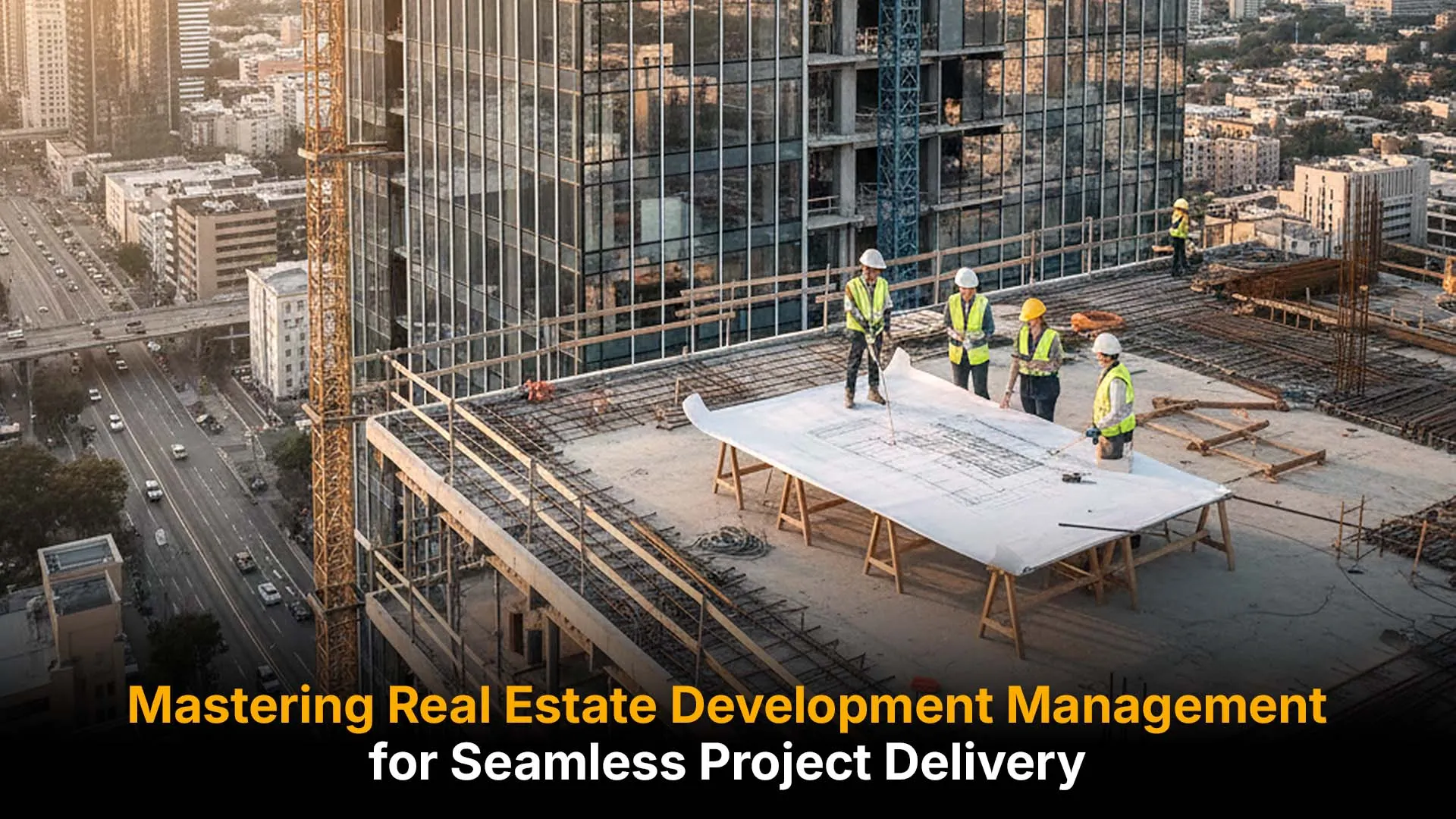
Real estate development has always been about judgment—reading markets, managing risk, and executing well on the ground. But as we move into 2026, experience alone is no longer enough. Rising land costs, tighter regulations, demanding buyers, and compressed timelines are pushing Indian real estate into a new phase—one where data, technology, and execution discipline define outcomes.
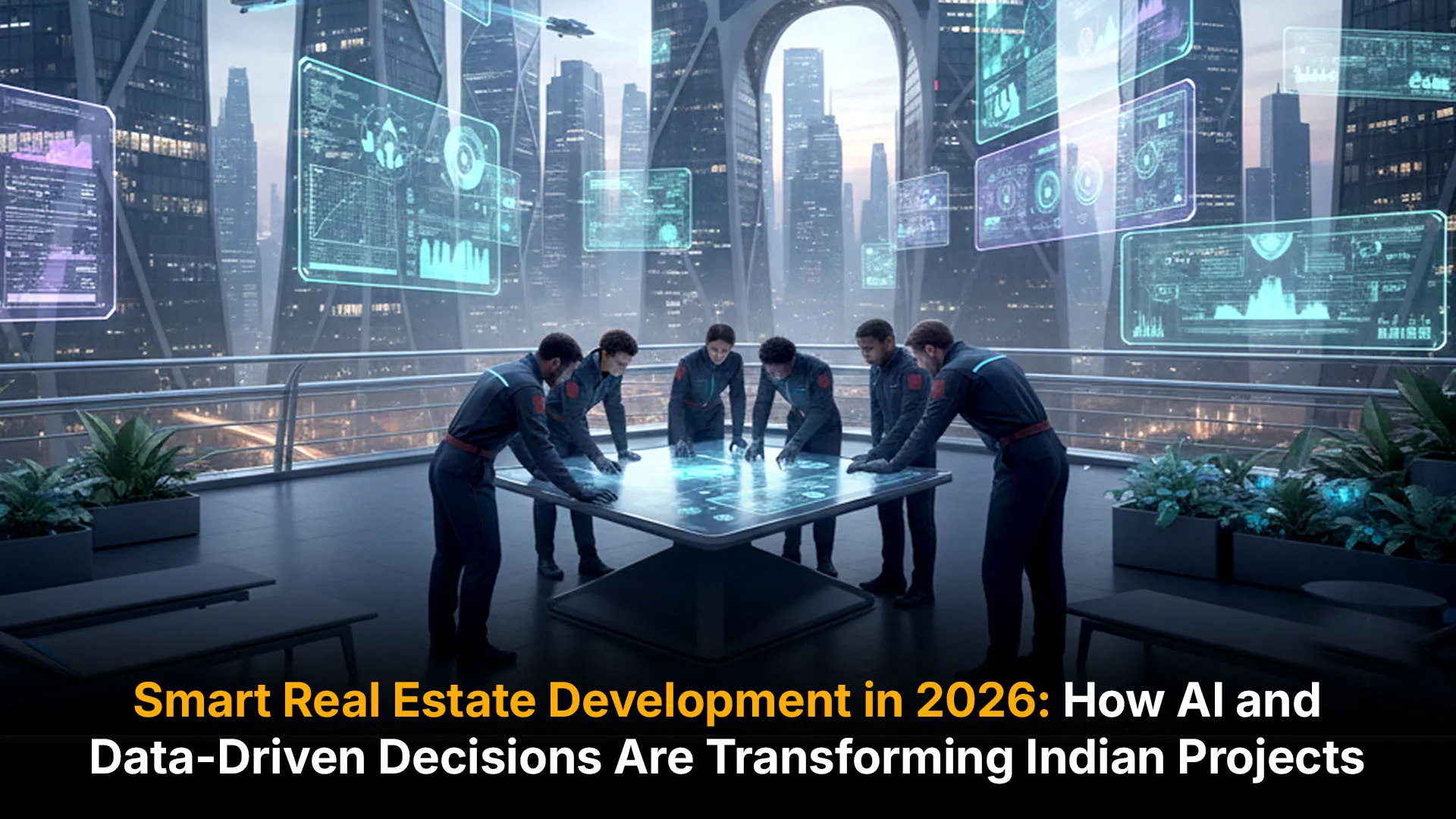
Across India, projects are becoming larger, more complex, and more capital-intensive. In this environment, intuition-led planning is giving way to data-driven real estate decisions that reduce uncertainty across feasibility, design, construction, and sales. Developers who embrace AI in real estate in India are not just building faster—they are building smarter, with clearer visibility on demand, costs, and long-term value.
In this blog, we explore how modern real estate projects in India are being shaped by AI, analytics, and smart development practices—and why these capabilities are becoming essential, not optional, for developers who want to deliver profitable, timely, and future-ready projects in 2026 and beyond.
Why Smart Real Estate Development Matters in 2026
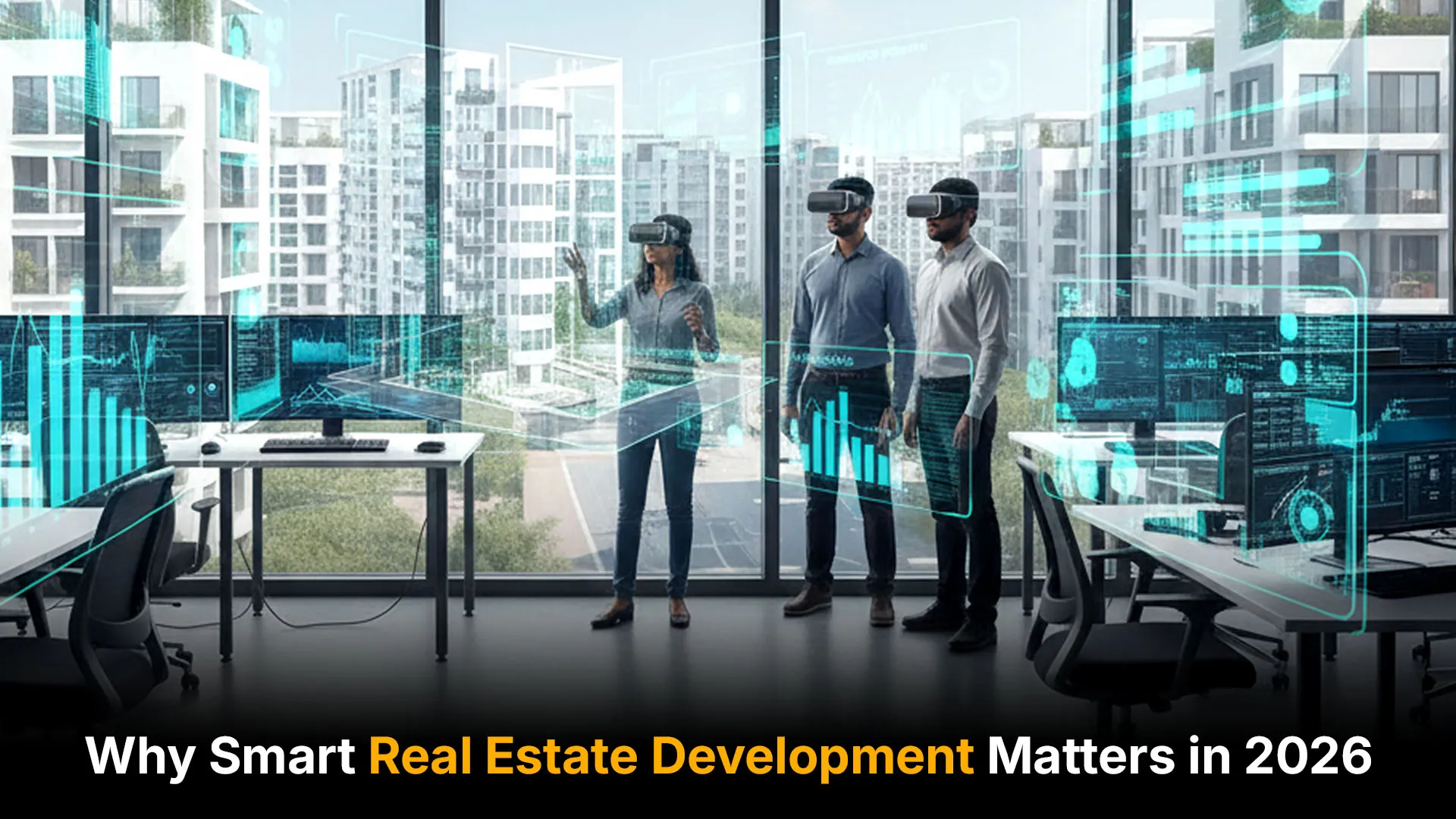
Real estate development in 2026 is no longer defined by construction alone. Success increasingly depends on how early risks are identified, how precisely demand is understood, and how tightly execution is managed across the project lifecycle.
As Indian real estate projects scale in size and complexity, developers are under pressure to deliver faster, optimise capital deployment, and meet evolving buyer expectations—all while maintaining margins. This is where smart real estate development, backed by AI and data-led insights, becomes a decisive advantage.
Here’s why adopting a full-spectrum expertise in real estate development approach is essential:
1. Smarter Project Planning from Day One
AI-powered tools allow developers to analyze market demand, plot sizes, and demographic trends to optimize layouts and unit types. By understanding buyer preferences in real time, developers are able to design spaces that maximize both functionality and profitability. This reduces guesswork at the feasibility stage and ensures that layouts, configurations, and amenities are aligned with real demand—critical for long-term absorption and profitability.
2. Predictive Construction Management
In real estate development in 2026, delays and cost overruns are less about unforeseen events and more about late visibility. With AI in real estate, machine learning algorithms anticipate project delays, resource shortages, or budget overruns before they occur. This proactive approach ensures timely delivery, reduces risks, and increases investor confidence. Predictive models are becoming a cornerstone of real estate development in 2026, allowing developers to stay ahead of potential challenges.
3. Optimized Resource Allocation
Data-driven insights help allocate capital, materials, and manpower efficiently. By predicting peak requirements and monitoring supply chains, we reduce waste, lower costs, and maintain high construction quality. Efficient resource allocation is one of the key aspects of modern real estate projects India that sets successful developers apart in 2026.
4. Improved Customer Engagement
AI tools analyse buyer preferences, engagement patterns, and response data to personalise communication and optimise sales strategies. Virtual walkthroughs, targeted outreach, and intelligent pricing insights improve conversion rates while enhancing the overall customer experience.
5. Sustainability and Compliance
Sustainability is now a core expectation, not an add-on. Analytics monitor energy usage, material sourcing, and environmental impact. Smart development ensures regulatory compliance while promoting green construction practices, creating value for both developers and end-users. Sustainability is no longer optional—it’s a requirement for all modern real estate projects India.
Adopting smart real estate practices is no longer optional—it’s the standard for forward-thinking developers who want to deliver high-quality, real estate development in 2026 efficiently and responsibly.

Things to Consider Before Implementing AI in Real Estate Projects
While AI and data-driven real estate decisions are transforming the sector, developers need to approach adoption thoughtfully. Here are three key considerations:
1. Integration with Existing Systems
AI tools must integrate seamlessly with project management, finance, and CRM systems. One needs to ensure all platforms communicate effectively to provide unified insights and avoid operational silos. Seamless integration is essential for successful real estate development in 2026 and enhances decision-making efficiency.
2. Data Quality and Accessibility
The accuracy of AI predictions depends on reliable data. Clean, structured, and up-to-date project and market data are critical. There is a need to invest in robust data collection systems to ensure actionable insights, which support real estate trends 2026 and modern real estate projects India.
3. Training and Expertise
Technology is only as effective as the people using it. Teams must be trained to interpret data-driven real estate insights, make informed decisions, and apply analytics in real-world scenarios to deliver measurable results. Expertise in applying AI in Indian real estate ensures that each project remains aligned with the objectives of real estate development in 2026.
By approaching adoption thoughtfully, AI is implemented in a way that enhances project performance, minimises disruption, and helps maximise returns for investors.
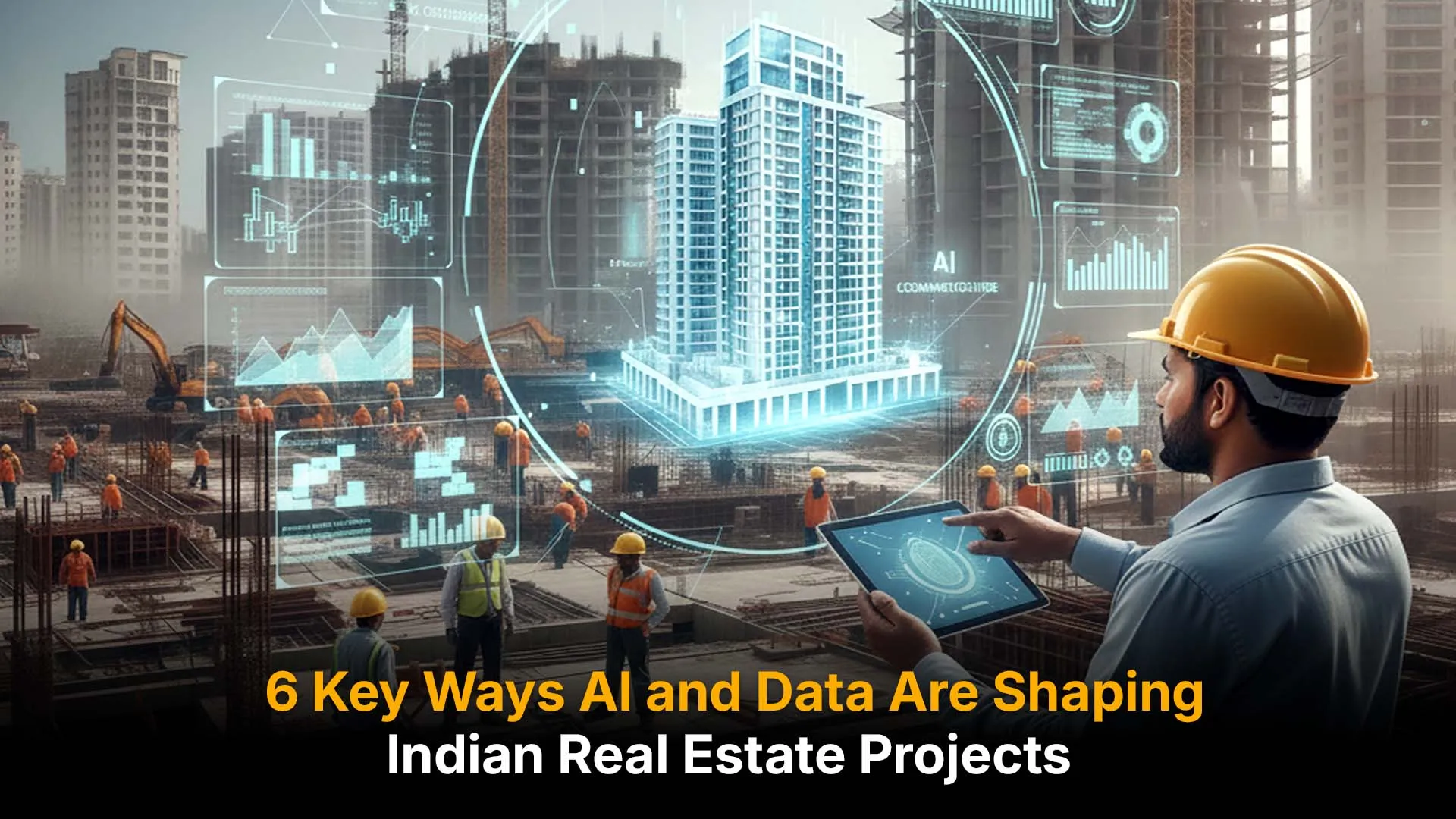
6 Key Ways AI and Data Are Shaping Indian Real Estate Projects
1. Site Selection with Predictive Analytics
Choosing the right location is critical for project success. Smart real estate development uses AI to evaluate demographics, connectivity, and growth areas. Predictive analytics in real estate development in 2026 ensures projects are strategically positioned, increasing both sales and long-term value for developers.
2. Real-Time Project Monitoring
AI dashboards track construction progress, budgets, and resources in real time. Deviations are detected early, corrective actions coordinated, and clients receive transparent updates. Real-time monitoring is a hallmark of modern real estate projects India and a vital trend in real estate development in 2026.
3. Sales Forecasting and Marketing Optimization
Machine learning analyzes historical sales, market trends, and buyer behavior to predict demand and pricing. These insights optimize marketing campaigns, target the right segments effectively, and increase conversion rates. Using data-driven real estate decisions ensures campaigns are aligned with real estate trends 2026.
4. Risk Management and Cost Control
AI models predict potential risks like labor shortages, material price changes, and regulatory challenges. We plan contingencies and negotiate supplier contracts, safeguarding project budgets. Advanced risk management is essential in real estate development in 2026 for both new and ongoing projects.
5. Design and Space Optimization
Generative AI helps create layouts that balance aesthetics, functionality, and cost-efficiency. Multiple design scenarios are simulated to optimize unit configurations and usability. Leveraging technology in construction ensures that modern real estate projects India deliver superior value.
6. Enhanced Post-Sales Services
Data-driven systems extend beyond completion into occupancy management, maintenance planning, and customer feedback analysis. This improves resident experience, reduces operational friction, and helps protect the long-term value and reputation of the development.
6 Key Ways AI and Data Are Shaping Indian Real Estate Projects
1. Site Selection with Predictive Analytics
Choosing the right location is critical for project success. Smart real estate development uses AI to evaluate demographics, connectivity, and growth areas. Predictive analytics in real estate development in 2026 ensures projects are strategically positioned, increasing both sales and long-term value for developers.
2. Real-Time Project Monitoring
AI dashboards track construction progress, budgets, and resources in real time. Deviations are detected early, corrective actions coordinated, and clients receive transparent updates. Real-time monitoring is a hallmark of modern real estate projects India and a vital trend in real estate development in 2026.
3. Sales Forecasting and Marketing Optimization
Machine learning analyzes historical sales, market trends, and buyer behavior to predict demand and pricing. These insights optimize marketing campaigns, target the right segments effectively, and increase conversion rates. Using data-driven real estate decisions ensures campaigns are aligned with real estate trends 2026.
4. Risk Management and Cost Control
AI models predict potential risks like labor shortages, material price changes, and regulatory challenges. We plan contingencies and negotiate supplier contracts, safeguarding project budgets. Advanced risk management is essential in real estate development in 2026 for both new and ongoing projects.
5. Design and Space Optimization
Generative AI helps create layouts that balance aesthetics, functionality, and cost-efficiency. Multiple design scenarios are simulated to optimize unit configurations and usability. Leveraging technology in construction ensures that modern real estate projects India deliver superior value.
6. Enhanced Post-Sales Services
Data-driven systems extend beyond completion into occupancy management, maintenance planning, and customer feedback analysis. This improves resident experience, reduces operational friction, and helps protect the long-term value and reputation of the development.

Conclusion
Real estate development in 2026 demands more than speed—it demands clarity, control, and execution certainty. Whether you’re evaluating a new site, restructuring an ongoing project, or planning a future-ready development, data-led decision-making can materially reduce risk and improve outcomes.
At ArisUnitern RE Solutions, we combine our 250+ years of collective expertise to deliver real estate project solutions across the real estate value chain that are timely, profitable, and sustainable. By leveraging smart real estate development strategies,we set new benchmarks for real estate trends 2026, ensuring every project is executed with precision, innovation, and excellence.
FAQ’s
1. What is smart real estate development and how does it work?
Smart real estate development uses technology, analytics, and advanced planning to optimize every stage of a project. It streamlines construction, enhances design, manages resources efficiently, and improves decision-making to deliver timely, high-quality, and sustainable real estate outcomes.
2. How is AI being used in real estate in India?
AI in real estate helps analyze market trends, predict demand, optimize layouts, manage resources, and monitor project progress. It enables personalized customer experiences, improves operational efficiency, and supports developers in making informed decisions for better project planning and execution.
3. What are the advantages of data-driven decisions in real estate projects?
Data-driven decisions reduce risk, optimize budgets, and improve project timelines. They allow developers to predict market demand, allocate resources efficiently, enhance design strategies, and ensure projects meet both investor expectations and end-user needs, resulting in higher profitability and satisfaction.
4. Which are the top real estate technology trends in 2026?
Leading trends include AI-driven analytics, predictive construction management, virtual reality for property visualization, IoT-enabled building monitoring, and sustainable construction technologies. These innovations improve project planning, execution, and customer engagement while enhancing overall efficiency and cost-effectiveness.
5. What are the benefits of smart real estate strategies for developers and investors?
Smart strategies help reduce delays, optimize costs, and improve project quality. They provide clear insights into market trends, enable efficient resource management, enhance buyer engagement, and support sustainable practices, ensuring higher returns and long-term success for both developers and investors.