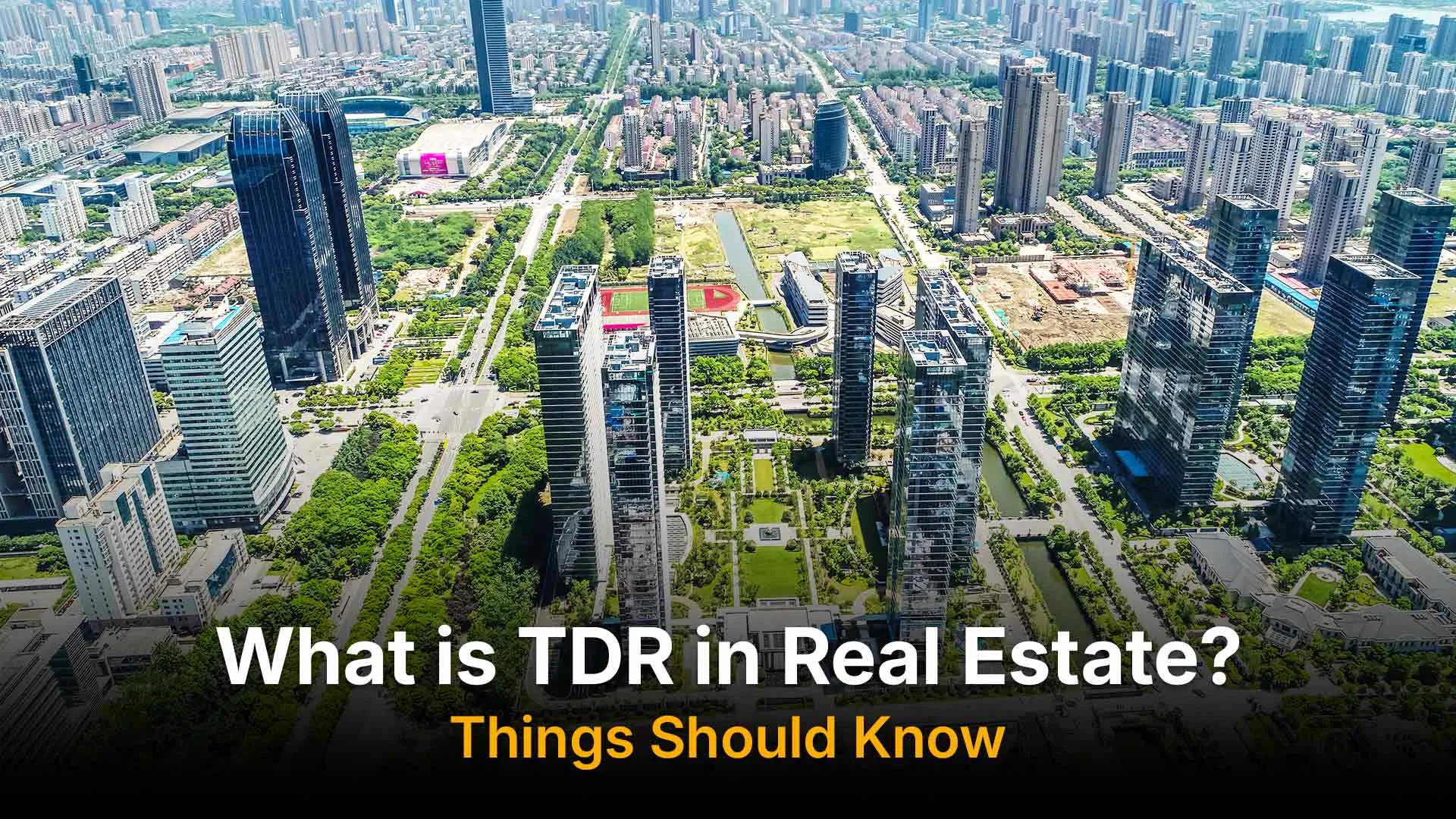
Have you wondered how urban cities expand while still retaining structure and balance? Or how real estate developers acquire extra construction rights for high-rise projects? That’s where the concept of TDR in real estate comes into play. But what is TDR in real estate, and why is it critical for property developers and urban planners? This blog dives into everything you need to know about TDR and how it’s shaping modern urban development.
What is TDR in Real Estate?
TDR, or Transfer of Development Rights, is a legal mechanism that allows property owners to transfer unused development rights from one plot of land to another. This tool is often used in urban planning to balance the preservation of certain areas while enabling development in others.
For instance, a plot designated as a non-developable zone (like heritage sites or green spaces) can transfer its development rights to another plot in a more urbanized, buildable area. This promotes balanced growth and ensures sustainable use of urban spaces. But it doesn’t end there—TDRs come in multiple categories tailored for specific needs.
Types of TDR
- Road TDR – When landowners relinquish a portion of their land to the government for public infrastructure, such as roads or highways, they are compensated with TDR certificates. These certificates grant them additional development rights to be utilized on other plots of land or sold to other developers.
- Slum TDR – Slum TDR results from redevelopment projects aimed at improving living conditions in slum areas. Developers working on slum rehabilitation earn TDRs, which they can use for additional construction elsewhere, incentivizing them to take on these social projects.
- Agricultural TDR – Agricultural TDR is designed to preserve farmland. When farmers or landowners agree to restrict development on agricultural land, they receive TDR certificates, enabling them to transfer their development rights to urban areas while ensuring green zones remain intact.
- Heritage TDR – Heritage TDR is used to conserve historical landmarks and culturally significant sites. Landowners of heritage properties can transfer their development rights elsewhere, allowing those areas to remain undisturbed while benefiting financially.
- Reserved Plots TDR – Reserved plots like parks or government utility areas often hold restrictions on development. However, TDR certificates allow owners of reserved plots to transfer their unused rights to other regions, ensuring they don’t lose value from their land.

Benefits of TDR
Why is TDR such an invaluable tool in urban planning and real estate? Here are five primary benefits:
- Efficient Land Utilization – TDR encourages the efficient use of limited urban land resources. By transferring rights, underutilized spaces can remain preserved, while growth concentrates on areas better suited for development.
- Promotes Balanced Development – It ensures that urban development remains balanced by avoiding overbuilding in crowded cities, easing congestion, and promoting construction in zones designed for expansion.
- Encourages Preservation – Through types like Heritage TDR and Agricultural TDR, development rights are used to incentivize landowners to preserve historical, cultural, or environmentally sensitive areas while still benefiting from their assets.
- Monetary Benefits for Property Owners – Landowners with non-developable land gain a monetary advantage by selling their TDR certificates to developers. This makes TDR an equitable and profitable mechanism for all involved.
- Streamlines Urban Growth – TDR offers a structured framework for guiding urban expansion. By directing growth to designated areas, cities can grow smarter, not denser.
See Also: Doddaballapur: The Future Hub of Real Estate in North Bengaluru
Challenges of TDR
While TDR is undoubtedly a brilliant tool, it’s not without its challenges. Here are five areas where TDR can be complicated or difficult to implement effectively:
- Complex Regulations: Understanding, acquiring, and utilizing TDRs can be difficult due to the complex legal issues surrounding their issuance and use. Clear guidelines are often murky, delaying processes for both government bodies and private parties.
- Inequities in Market Demand: One of the issues with TDR is the uneven demand between areas where rights are transferred and those receiving them. This discrepancy can lead to reduced market value for TDR.
- Coordination Challenges: TDR schemes depend on coordination among multiple stakeholders—governments, landowners, developers. Poor communication or lack of transparency can hinder its execution.
- Speculative Trading: TDR certificates can become commodities for speculative trading, detaching their value from their intended purpose—planned and equitable urban development.
- Implementation Costs: For governments and municipalities, rolling out and managing TDR schemes requires significant administrative resources and costs, which can deter adoption in smaller cities or towns.

Unlock Smarter Real Estate Growth with Arisunitern
If you’ve ever wondered, “What is TDR in real estate?”, it’s time to explore how understanding the nuances of road TDR, slum TDR, agricultural TDR, heritage TDR, and reserved plots TDR can equip you with the knowledge to make smarter investments, plan better developments, and offer innovative solutions as an urban planner. TDR in real estate is more than just a tool—it’s a strategy that fosters sustainable and balanced urban growth while preserving invaluable land across diverse categories.
If you’re looking to supercharge your real estate projects, consider partnering with Arisunitern, a Real Estate Development Management Company in Bangalore. We’re a team of seasoned professionals with over 250+ years of deep industry experience. Our team specializes in providing end-to-end solutions for real estate projects across the 3M’s of real estate—Money, Material, and Management.
Our approach is tailored to deliver the absolute best outcomes for our clients. Partnering with us means working with people who operate with your brand’s identity and best interests at heart. Together, we can co-create innovative, responsible, and profitable real estate solutions.
Connect with us to see the future of real estate with Arisunitern.
FAQs
What is the purpose of TDR?
The purpose of TDR (Transferable Development Rights) is to promote balanced urban growth by allowing landowners to transfer unused development rights to other locations. This mechanism helps preserve critical spaces such as heritage sites, green zones, and low-density areas while facilitating concentrated development in better-equipped urban zones.
2.What is TDR in real estate example?
An example of TDR in real estate would be a landowner near a preserved heritage site selling their unused development rights. These rights might be purchased by a developer to build a high-rise structure in a designated growth area, ensuring both preservation and urban expansion.
What does TDR stand for in real estate?
TDR stands for Transferable Development Rights in real estate. It enables the transfer of unused development potential from one property to another, ensuring sustainable and strategic urban development while protecting valuable land resources such as agricultural plots, heritage sites, or green spaces.